


Char Dham Yatra in Uttarakhand India Himalayas Dev Bhoomi
Char Dham Yatra – Uttarakhand is one state that has been referred to in the Purans by names such as Dev bhoomi (LAND OF GODS), punyabhoomi, rishiyon se youktbhoomi(land full of sages).
A state where several gods and goddesses are present, a state where mother Ganga keeps going forward washing every one with her sacred water,
“One such sacred place in -Uttarakhand” where is located – 5 badri, 5 Kedar, 5 priyag.
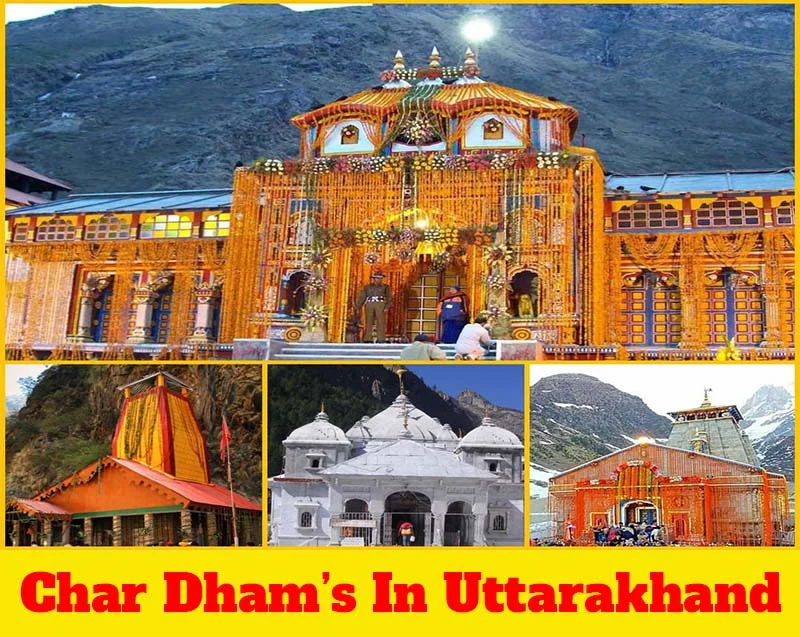
Yamunotri, Gangotri, Kedarnath and Badrinath are four holy destinations in Indian Himalayas remote from pollution in peaceful climate and refreshing greenery at various districts “Uttarakhand”.
These 4 sacred sites named as “char Dham” where ‘char’ is- four and dham is used for ‘religious destination’ and their travel is named as “Tirthyatra” (pilgrimage), where thousands of pilgrims not only India but also from foreign visit.
Char Dham Yatra is a tour of four holy Hindu temples in the state of Uttarakhand, India. The four temples are Yamunotri, Gangotri, Kedarnath, and Badrinath.
Some of the main features of each temple are below:
Yamunotri: At an elevation of 3293 meters above the sea, the temple of Yamunotri stands as a shrine to goddess Yamuna. The star attraction of the temple is the hot water springs known as “Janki Chatti.” and “Surya Kund,” which are said to possess healing properties.
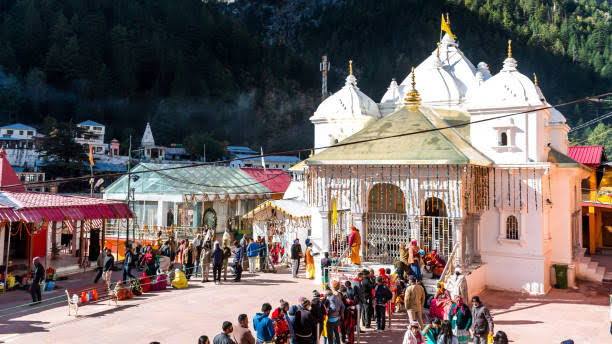
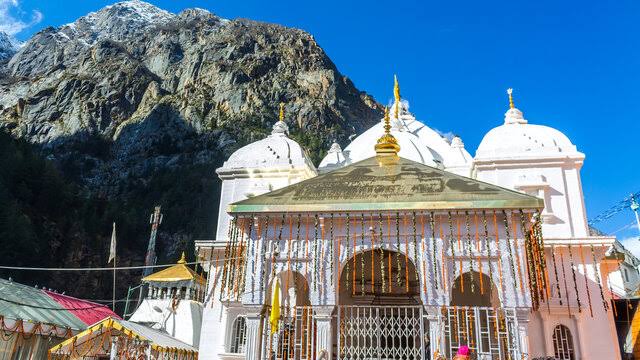
Gangotri: Situated at an elevation of 3100 meters from sea level, Gangotri temple is devoted to goddess Ganga. The main attraction of the temple is the Gangotri Glacier, which is the origin of river Ganga.
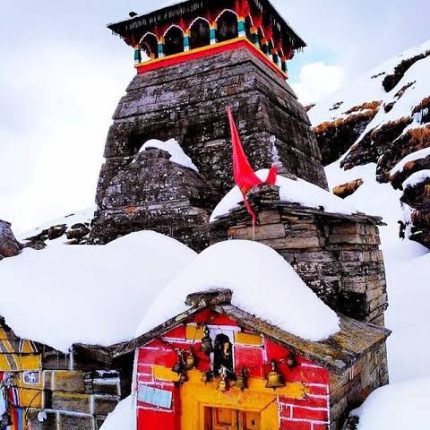
Kedarnath: Situated at an elevation of 3583 meters above sea level, Kedarnath temple is one of the temples of Lord Shiva. The beauty of the temple lies in its breathtaking location in the midst of the Himalayan range and the trek to reach the temple.
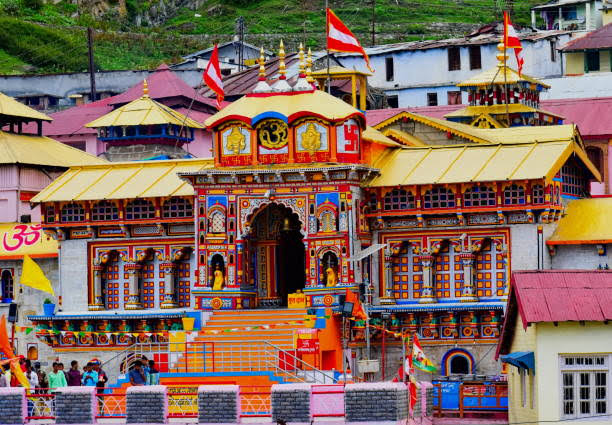
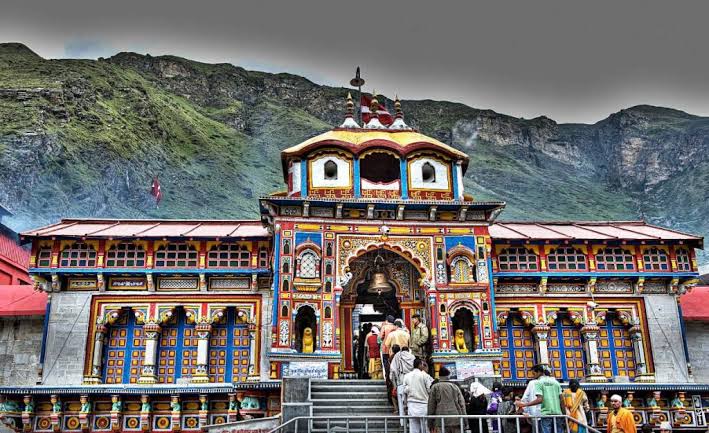
Badrinath: It is situated at an elevation of 3133 meters above sea level. Badrinath temple is devoted to Lord Vishnu. The place’s main attraction is the natural hot water springs known as “Tapt Kund” and stunning views around the temple.
Overall, the Char Dham Yatra is a spiritually uplifting and physically challenging pilgrimage that attracts devotees from all over India and the world. It is a journey that combines natural beauty, adventure, and devotion.
According to Hindu belief, since when did Char Dham Uttarakhand, Yamunotri, Gangotri, Kedarnath, and Badrinath start?
Char Dham in the state of Uttarakhand, including Yamunotri, Gangotri, Kedarnath, and Badrinath, have been considered sacred pilgrimage centers in Hinduism since centuries. Though there is no clear historical evidence that identifies their establishment dates with certainty, the pilgrimage centers are steeped in mythological and religious lore.
Following Hindu legends and mythology, the history of the Char Dham dates back to ancient times. It is said that Yamunotri, the origin of the river Yamuna, has been worshiped since the era of the sage Asit Muni, who used to live there. Gangotri, the origin of the river Ganges, is linked with the sage Bhagiratha, who had undergone tough penance to bring the river from heaven down to Earth to wash away the sins of his ancestors.
Kedarnath, in the Garhwal Himalayas, is said to have been created by the Pandavas of Hindu epic Mahabharata. The Pandavas, after the great Kurukshetra war, are said to have approached Lord Shiva to atone for the killings and set out on a pilgrimage. Lord Shiva, however, evaded them and appeared before them in the guise of a bull at Kedarnath. The Pandavas finally got hold of Lord Shiva and constructed the Kedarnath temple at the same spot.
Badrinath, in the Chamoli district, is connected with Lord Vishnu. It is said that Lord Vishnu meditated here for many thousands of years beneath a Badri tree. The present-day Badrinath temple is said to have been built by the sage Adi Shankaracharya in the 8th century CE, but there could well have existed previous temples in this location.
Even though the historical accounts might not be accurate with dates, the religious and mythological values of these holy places have been deeply rooted in Hindu society for centuries. Pilgrims from all over the globe still visit these sacred sites as an integral part of their spiritual pilgrimage.
Beliefs for Char Dham Yatra
“Char Dham” holds a great position in Hindu Mythology and people believe that it is important to go for this yatra once in a lifetime in a clockwise direction to get salvation and overcome all the sins. It is great for the people who are in search of spirituality and tranquillity. In the puranas,
Char dhamyatra is done in a sequence from west to east
- Yamunotri
- Gangotri
- Kedarnath
- Badrinath
History of Char Dham Yatra
The above mentioned four pilgrimage spots have their own mythological past which has created those sites great holy places. There are some reasons why pilgrims take Char Dham Yatra:
Religious Significance: For pious Hindus, the Char Dham Yatra is a sacred pilgrimage that is said to wash away their sins and bestow blessings from the gods upon them. It is said that pilgrims attain spiritual enlightenment by visiting the Char Dham temples and acquire moksha or liberation from the cycle of birth and death.
Adventure and Trekking: Char Dham Yatra includes trekking through the stunning Himalayan scenery, such as mountain passes, glaciers, and river crossings. For those seeking adventure and nature, the trek is an unparalleled chance to witness the natural splendor of the area.
Cultural Experience: The Char DhamYatra is also an experience that many people get of culture, as it is all about interacting with the locals, getting a glimpse into their lifestyle, and understanding their way of living and their customs and traditions.
In all, individuals embark on the Char Dham Yatra for various reasons, but the thing that unites them is that they are convinced that the pilgrimage will help them connect with the divine and enable them to achieve spiritual satisfaction.
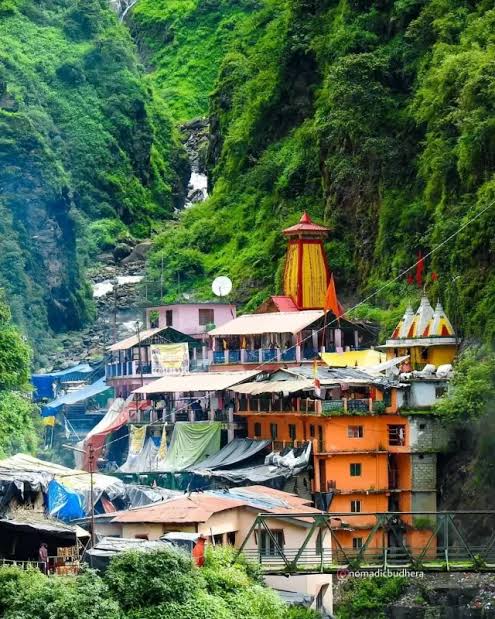
YAMUNOTRI DHAM
GODDESS Yamuna is the daughter of lord surya and sister of yamraj. Puranas say that a saint(sage) named “Asti muni” lived here, when he was unable to go to Gangotri during old age, so he did penance, mother ganga was happy and she started flowing in Yamuna, And he took bath in Ganga and Yamuna.
Yamunotri is a big dham situated in Uttarkashi district of Uttarakhand, Which is the origin of river Yamuna
Yamuna River is the second most sacred river of India after Ganga, which is the biggest tributary of Ganga.
Pilgrimage season the gates of Yamunotri temple open on akshayatritiya of Shukla paksha of vaishakh month (May) and close on Yama dwitiya of kartik month (November).
Yamunotri temple is located at 3291 m above sea level, which was constructed in 1839 by the king of Tehri “sudarshan shah”.
According to belief, bathing in the water here cleanses the soul and wipes out all sins.
Hot water spring are available around this temple and surya Kund is most significant of them, where pilgrims boil potatoes and rice and eat them as Prasad.
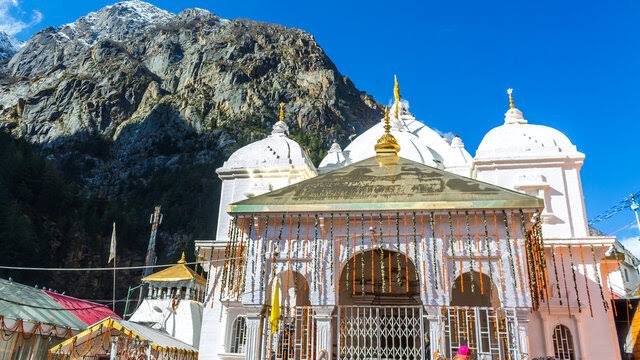
GANGOTRI DHAM
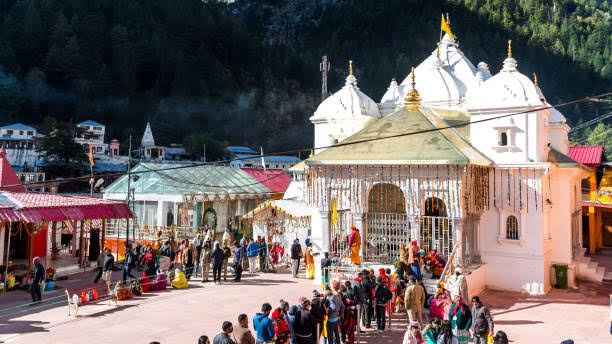
Gangotridham – which is a great Hindu pilgrims’ site in the district of Uttarkashi in the state of Uttarakhand in India.at 19 km distance from Gangotri is -Gomukh, which is the terminal end of the Gangotri glacier and the source of the Ganga River. It is said in the puranas that on the occasion of the Ashwamedhayagya, king sagar dispatched his 60,000 sons to find out a lost horse, all the sons approached the hermitage of saint Kapil to look for the horse, who was in meditation at that time, he lifted the engrodded sage Kapil in meditation, on account of which the sage became angry and cursed him and devoured him. To give salvation to prince’s Bhagirathi’s extreme meditation made the goddess Ganga comes down to earth.
Pilgrimage time the doors of Gangotri temple are opened on akshayatritiya of Shukla paksha of vaishakh month (May) and closed on Yama dwitiya of kartik month (November).
Ganga River is the most holy of the river of India and people think that bathing in Ganges eradicates all human sins. For people after death, it is thought that it is obligatory to insert the ashes in the Ganges to achieve salvation, Gangotri temple lies at 3042 m above sea level which was constructed in 19th century by naipal king “Amar Singh Thapa”.
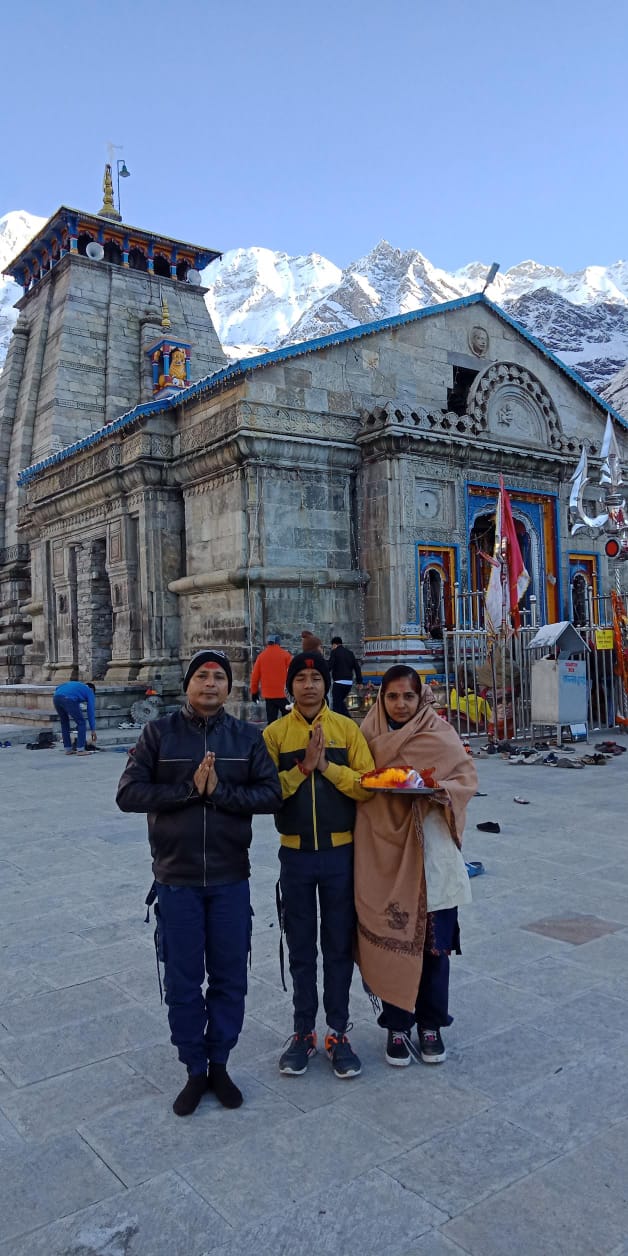
KEDARNATH DHAM
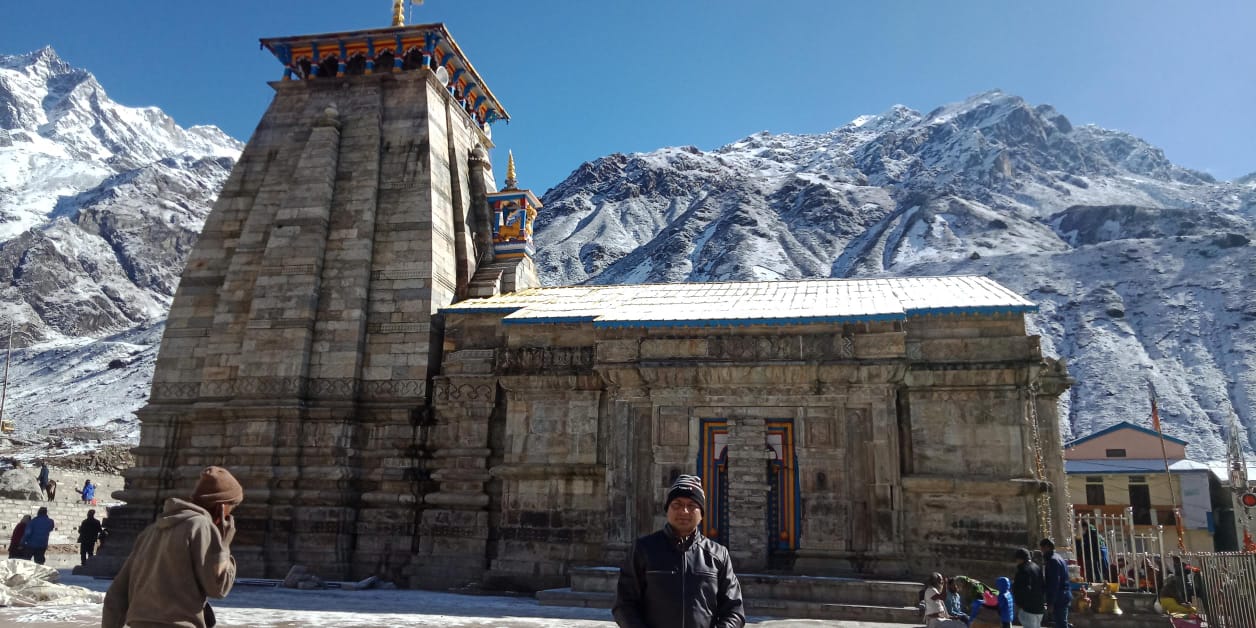
KEDARNATH– is the most significant Hindu pilgrimage site situated in rudraprayag district of Uttarakhand state of India. Which is 86 km from rudraprayag. The Shivling of Kedarnath temple situated here is one of the twelve Jyotirlingas. In Hinduism, Kedarnath is included among the Chardham and five kedars.
It is said in the ‘puranas’ that Pandavas wished lord Shiva to pardon them for their wrongdoings which they have done by slaying their own brothers “kauravas” in Mahabharata war, but lord Shiva did not wish to pardon them and transformed himself into a bull and when the Pandavas come to know about them that this bull is lord shiv, then lord shiv went into the ground which was grabbed from the back by Bhīma. Because of this cause the mouth of bull stayed in naipal and rear part stayed in Kedarnath.
Every part of Shiva differed at different locations- such as hump at Kedarnath, navel at MadhMaheshwar, hair at Kalpeshwar, face at Rudranath and arms at Tungnath. And all these five sacred places called PanchKedar.
Pilgrimage season the doors of Kedarnath temple are opened in the month of Baishak (April-May) and closed in the month of kartik (October-November).
Kedarnath temple lies at the height of 3583 m above sea level which was constructed by Pandavas and a temple alongside it was constructed by Saint AdiShankaracharya in the 8th century.
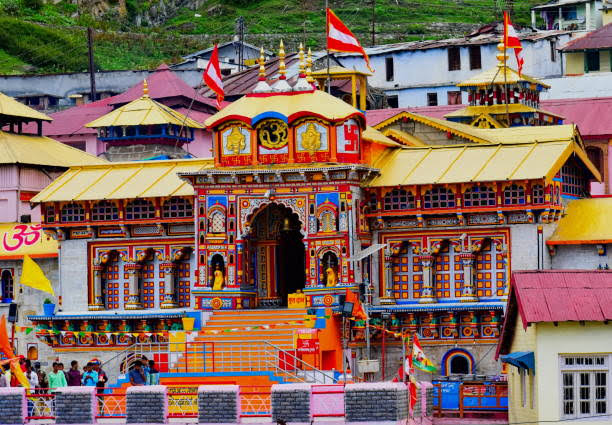
BADRINATH DHAM
Badrinath Dham – A prominent Hindu and Jain pilgrimage site found in Chamoli district of the Uttarakhand state of India. This Dham also honors lord adinath, the 1stTirthankar of Jainism, Badrinath Dham is found on the river Alaknanda’s banks. It is mentioned in the ‘puranas’ that Lord Vishnu underwent meditation here as a penance his wife goddess Laxmi turned into a tree and stood guard over him from the harsh nature elements.
Saint Adishankaracharya discovered the idol of lord Vishnu in the Alaknanda River and shankaracharya installed it in a cave near the TaptKund.
Pilgrimage season the doors of Badrinath temple are opened on basantpanchami (April-May) and closed on kartik month (October-November).
Badrinath temple is located at 2800m above sea level, the temple was built by Garhwal kings and it has been rebuilt numerous times.
Best Time to Do Char Dham Yatra
The perfect time to go on this Yatra is from May to October. The gates of these holy sites are closed during monsoon and winter season because the areas receive heavy snowfall in winters and are prone to landslides in monsoon. The routes get blocked and the idols shifted the pilgrim sites which are nearby.
Temperatures- Yamunotri, Gangotri, Kedarnath, and Badrinath. The temperatures in this region can vary depending on the time of year and the altitude of each shrine.
During April, the temperatures in the Char Dham Yatra area tend to be rather chilly, particularly at higher altitudes. The daytime average temperature in Yamunotri and Gangotri during this month is about 10°C to 15°C, and at night, it can fall to 0°C or even below. In the same manner, April weather in Kedarnath and Badrinath is approximately 5°C to 10°C during the daytime, with nights dropping below freezing temperatures. Bring warm clothing and other items as protection against cold weather.
Temperatures begin to decline as winter sets in from mid-October. At this time of the year, the temperature in Yamunotri and Gangotri is approximately 5°C to 10°C during the day and goes down to 0°C or lower in the night. Likewise, the temperature in Kedarnath and Badrinath in mid-October is approximately 0°C to 5°C during the day and goes down to below freezing at night. It is worthwhile to bring warm clothes, such as jackets, gloves, and hats, to keep yourself from the cold weather conditions during this season.
It is recommended to plan your Char Dham Yatra during the summer months, from May to June or September to October, when the temperatures are more pleasant and the weather is generally clear and favorable for travel. However, it is always important to check the weather forecast before embarking on your journey and prepare accordingly.
Why start the char dham yatra from Haridwar?
Haridwar is of great religious importance in Hinduism and is regarded as one of the sacred cities in India. It is thought to be the starting point of the Char Dham pilgrimage in Uttarakhand. There are many reasons why the Char Dham Yatra generally commences at Haridwar:
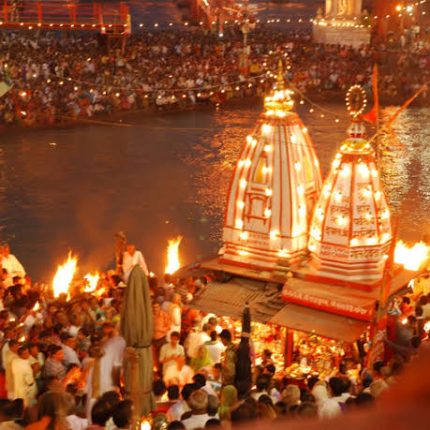
Spiritual Purification: Haridwar is situated where the sacred rivers Ganga and Yamuna merge. A dip in the holy waters of the Ganges at Haridwar is said to wash away one’s sins and cleanse the soul. By starting the Char Dham Yatra from Haridwar, pilgrims undertake spiritual purification prior to visiting the four sacred places.
Traditional Significance: Haridwar has been a sacred pilgrimage site for centuries. It is referred to in ancient Hindu scriptures and epics such as the Mahabharata. The city is rich in religious and cultural heritage, and beginning the Char Dham Yatra from this sacred location is a gesture to pay respect to that tradition.
Accessibility: Haridhar is well linked by road, rail, and air and hence easily accessible for pilgrims from various regions of India and even foreign countries. It is a convenient point of departure for the Char Dham Yatra as it has infrastructure and transport facilities for the pilgrimage.
Blessings of the Gods: Haridwar is filled with temples and ashrams, pulling in pilgrims and seekers of faith. It is said that starting the Char Dham Yatra from Haridwar helps devotees to invoke the blessings of the gods and sages who dwell within the city before undertaking the strenuous journey into the lofty Himalayas.
Cultural Significance: Haridwar also has a number of religious festivals and fairs, attracting crowds of pilgrims. Haridwar is famous for its exuberant and big celebrations, including the Kumbh Mela. Beginning the Char Dham Yatra from Haridwar provides pilgrims with an opportunity to be a part of the religious and cultural zeal of the city.
These are the reasons why, along with the religious and historical significance of Haridwar, it is a perfect place to begin the Char Dham Yatra. It marks the beginning of the pilgrimage and gets the pilgrims ready for the divine journey that follows
How to reach Haridwar from Delhi and others city’s ?
- By Train: Haridwar is very well connected with Delhi by train, and one can find quite a few trains running between the two cities. Some of these popular ones are the Shatabdi Express, Jan Shatabdi Express, and the Haridwar Mail. The duration is about 4 to 5 hours, depending on the train and the route.
By Bus: There are frequent bus departures from Delhi to Haridwar by government and private buses. The travel takes approximately 6 to 7 hours, depending on the route and traffic.
By Car: Haridwar is approximately 220 km from Delhi, and it will take 5 to 6 hours to travel by car to Haridwar. It can be either taken by taxi or your own vehicle.
By Flight: The nearest airport to Haridwar is the Jolly Grant Airport of Dehradun, which is about 35 km away from Haridwar. You can take a taxi or bus to Haridwar from the airport.
Overall, the most convenient and comfortable way to reach Haridwar from Delhi is by train. However, depending on your budget and preferences, you can choose any of the other options as well.
Short Itinerary Char Dham Yatra
- Day 01- Pickup to you Haridwar after Ganga Pooja – Drive to Jankichatti via Mussoorie, Kamptifall, Nainbag, Damta, Barkot (218 km) (8/9 Hours) overnight stay Hotel.
- Day 02- Early morning Trek from Jankichaatti to YamunotriDham (05 km) up and after Yamuna maiyaDarshan and after pooja come back to Jankichatti hotel overnight stay Hotel.
- Day 03- Early morning Drive from Jankichaatti To GangotriDham via Uttarkashi and Harshil Valley (222 km) (8/9 Hours) overnight stay Hotel and evening join Ganga Artidarshan.
- Day 04- Morning again visit Ganga temple and after poojadarshan same day Drive to Uttarkashi overnight Stay Hotel (108 km) (6/7 hours) overnight stay Hotel.
- Day 05- After breakfast Drive from Uttarkashi to Guptkashi (220) (8/9 Hours) overnight stay Hotel
- Day 06- Early morning drive from Guptkashi to Gaurikund (30 km) same day Trek to Kedarnath (16km) (8/9 hours) overnight stay Camp/ Hotel – Evening join KedarnathAartiDarshan back to hotel.
- Day 07- Early morning again visit kedarnath temple pooja and Darshan then back to Gaurikund (16 km) (7/8 hours) same day Drive to Guptkashi overnight stay Hotel.
- Day 08- Early morning Drive from Guptkashi to BadrinathDham ( 215 km) (8/9 Hours) overnight stay Hotel and Evening join BadrinathArtiDarshanpooja
- Day 09- After breakfast again visit temple for poojaDarshan and back to hotel , after lunch visit to Mana village and Bhimpool, Viyasguphavasudhara fall then come back to Hotel.
- Day 10- Early morning Drive from Badrinath to Haridwar via Rishikesh (320 km) (10/11 hours).
Online registration for Char Dham Yatra
The Char Dham Yatra is a pilgrimage to four Hindu temples located in the Himalayas of Uttarakhand, India. The four temples are Yamunotri, Gangotri, Kedarnath, and Badrinath.
The registration process for the Char Dham Yatra is not yet open. However, you can follow these general steps once the registration process opens:
- Visit the official website of Uttarakhand Tourism or the Char Dham Yatra website.
- Look for the registration link and click on it.
- Fill in the required details such as name, address, contact number, email address, and ID proof number.
- Select the package that suits your requirements and budget.
- Make the payment online through net banking, credit/debit card, or other payment modes.
- After successful payment, you will receive a confirmation email or message with your registration details and itinerary.
It is advisable to keep a printout of the confirmation and carry it with you during the yatra. Additionally, you should also carry a valid ID proof and other essential documents while undertaking the Char Dham Yatra.
Helicopter online best website for Kedarnath Dham
There are several websites that offer helicopter booking services for Kedarnath Yatra, and it is essential to choose a safe and reliable website to ensure a safe and hassle-free journey. Here are a few things you can check before booking a helicopter ride to Kedarnath:
- Look for a website that is authorized by the Uttarakhand government or the Kedarnath Temple Committee.
- Check the website’s reviews and ratings on trusted platforms like TripAdvisor, Google Reviews, or other travel forums.
- Look for a website that offers secure payment options like credit/debit cards or net banking.
- Check for any hidden fees or charges that might be included in the booking.
- Ensure that the website provides adequate information about the helicopter service, including flight duration, timings, baggage allowance, etc.
- Contact the website’s customer service to clarify any doubts or queries.
Some of the safe and reliable websites for booking helicopter services for Kedarnath Yatra are the official website of the Uttarakhand Government (uttarakhandhelicopter.com) and private operators like Pawan Hans, Heritage Aviation, UTair India, and Himalayan Heli Services. It is advisable to compare prices and services offered by different websites before making a booking.
How to make you Offline Booking for Char Dham Yatra season
Yes, offline registration for the Char Dham Yatra is also available for those who prefer to book their pilgrimage trip through a travel agent or at the tourism office. Here are some ways you can register offline for the Char Dham Yatra:
- Visit the nearest Uttarakhand Tourism office or the Char Dham Yatra office and fill in the registration form.
- You can also approach authorized travel agents who specialize in Char Dham Yatra packages. They will guide you through the registration process and help you book your trip.
- Another option is to visit the registration counters that are set up at different locations in Uttarakhand during the yatra season. You can register and book your trip on the spot.
When registering offline, you need to provide the necessary personal details and documents, such as a valid ID proof and address proof. Once you have completed the registration process, you will receive a confirmation slip or receipt, which you should keep safely and carry with you during the yatra. It is advisable to verify the authenticity of the travel agent or the registration counter before making any payment to avoid any fraud or inconvenience.